
Why Ayurveda Loves Coriander: A Cooling Herb for Heat, Inflammation, and Digestion
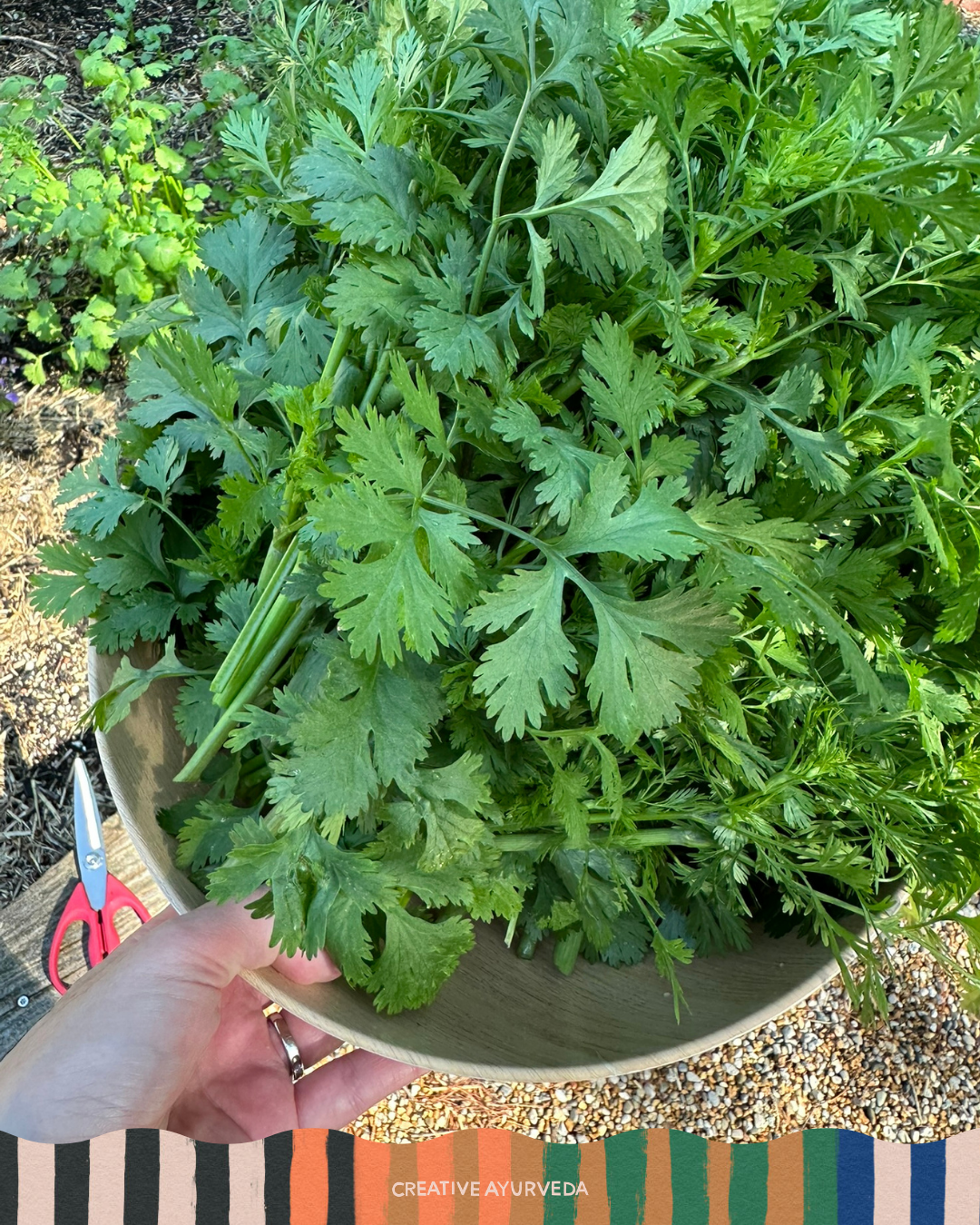
At the moment, my garden is producing coriander at a rate that can only be described as … aggressive. :)
Every few days I head outside to snip a handful for dinner, and somehow come back with an armful.
I’ve reached the stage where I’m handing bunches of it to friends. If you happen to walk past my house at the right moment, there’s a fair chance you’ll leave with coriander whether you wanted it or not.
It’s one of my favorite herbs this time of year.
Depending on which part of the plant you’re using, you may know it by different names. The fresh leafy part is usually called cilantro. The seeds are called coriander.
And this is one cool plant… pun intended. :)
Ayurvedically, coriander has a cooling nature, which makes it especially helpful for excess heat and inflammation in the body. Think: UTIs, hives, skin rashes, hot flashes, acid reflux, acne, seasonal allergies, or that general “too hot, irritated, inflamed” feeling. 🔥
This plant will cool your jets.
Both the fresh leaves and the seeds are great for digestion too — especially for gas, bloating, and irritation. (So sprinkle a few leaves on your Buddha Bowls!)
One of my favorite simple remedies is a simple cold infusion made from the seeds.
Here’s how to do it:
Lightly crush 1 tablespoon of coriander seeds and place them in a jar with 4 cups of cool water overnight. Strain the seeds the next morning and drink the infusion at room temperature.
This method is especially supportive for people prone to UTIs or burning sensations in the body.
(I drink it like this once a week as prevention.)
The fresh leaves are useful too. In Ayurveda, fresh cilantro juice is traditionally used for itchy, red, or inflamed skin. (I got hives a few weeks ago and found it surprisingly soothing.)
To make it:
Blend a generous handful of cilantro leaves with just enough water to create a smooth paste, then strain. The cooling juice can be dabbed onto irritated skin and left on for 15–20 minutes before rinsing with cool water.
You can also drink a little of the fresh juice internally for excess heat, allergies, or skin irritation — though if your digestion tends to be weak, you run cold, or bloat easily, coriander seed tea is usually the gentler option.
So this humble little plant — growing in gardens, grocery stores, and farmer’s markets everywhere — is actually pretty remarkable.
Cooling. Digestive. Easy to grow. Easy to use.
Sometimes the most useful remedies aren’t exotic at all.
They’re growing in the garden, taking over the raised beds, and getting handed out to unsuspecting neighbors.
peace, love & paint,
Penny